
Lee Lorenzen on the Future of Cellular Hydration Science
Oct 3, 2026
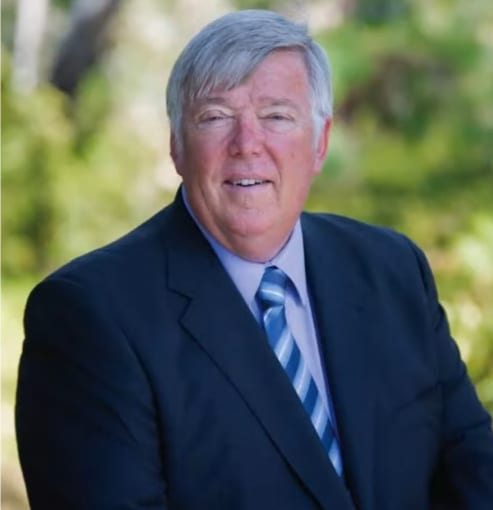
Rancho Santa Margarita researcher Lee Lorenzen says hydration science is shifting beyond water quantity and toward understanding how water behaves at the cellular level.
Rancho Santa Margarita, California Oct 3, 2026 (Issuewire.com) - For years, hydration advice has followed a simple formula: drink more water. But according to researcher and inventor Lee Lorenzen, the future of hydration science may depend less on volume and more on how water functions within the body.
Lorenzen, founder and CEO of Cluster Solutions, has spent decades studying water structure and cellular hydration. His work focuses on how water molecules organize and how that organization may influence hydration efficiency, nutrient transport, and biological activity at the cellular level.
"Hydration research is becoming much more detailed," Lorenzen says. "Researchers are no longer only asking how much water people drink. They're asking how water behaves once it enters biological systems."
Recent advances in molecular biology and imaging technology are helping drive that shift. Researchers can now study water interactions around proteins, membranes, and cells with far greater precision than in previous decades. Technologies such as cryo-electron microscopy, fluorescence spectroscopy, and molecular imaging systems are giving scientists a closer look at how water behaves inside living tissue.
According to the U.S. Geological Survey, the average adult human body is approximately 60% water, while the brain and heart contain closer to 73% water. Despite water's central role in biology, many aspects of cellular hydration remain under active study.
One area attracting growing interest involves water organization near biological surfaces. Researchers studying structured or interfacial water are examining how water molecules behave differently near proteins, DNA, and cell membranes compared to bulk liquid water.
"Inside cells, water is not necessarily behaving the same way it behaves in a glass," Lorenzen explains. "That difference is becoming increasingly important in modern hydration research."
Scientists are also studying aquaporins, microscopic proteins that regulate water movement across cell membranes. The discovery of aquaporins earned scientist Peter Agre the Nobel Prize in Chemistry in 2003 and helped reshape scientific understanding of how carefully the body manages water transport.
"These discoveries show that hydration is a highly controlled biological process," Lorenzen says. "The body is constantly regulating how water moves, where it moves, and how cells use it."
The growing interest in hydration science is also influencing the wellness industry. According to Grand View Research, the global functional water market exceeded $14 billion USD in 2022 and continues to expand as consumers look for new approaches to hydration and wellness support.
Lorenzen believes newer technologies will continue pushing hydration science into more advanced areas of study over the next decade.
"As imaging tools improve, researchers are able to study molecular behavior that was difficult to observe thirty years ago," he says. "That creates opportunities to revisit questions that were previously hard to answer clearly."
At the same time, Lorenzen stresses the importance of balancing curiosity with scientific discipline.
"There should always be skepticism in science," he says. "The goal is not to jump to conclusions. The goal is to keep asking better questions and continue testing ideas carefully."
Lorenzen's interest in hydration science began decades ago, rooted in his background in biology, pharmacology, and biomedical consulting. Over time, his work evolved toward studying water structure and developing clustered-water technologies designed to stabilize smaller molecular groupings of water.
Today, he continues working with physicians, researchers, and technical advisers while monitoring developments in molecular biology and hydration science.
"The more researchers learn about cellular behavior," Lorenzen says, "the more they realize hydration is more complex than people once believed."
As scientific tools continue to improve, Lorenzen expects hydration research to move further away from simple intake measurements and closer to understanding efficiency, transport, and molecular interactions within living systems.
"Water is involved in nearly every biological process," he says. "We are still learning how much there is left to understand."
About Lee Lorenzen
Lee Lorenzen is the founder and CEO of Cluster Solutions, a research and development company focused on clustered water technology and hydration science. With a background in biology and pharmacology, Lorenzen has spent decades researching water structure, molecular organization, and cellular hydration. He holds multiple U.S. patents related to clustered water processes and continues collaborating with researchers and physicians studying biological water behavior. Lorenzen is based in Rancho Santa Margarita, California.
Source :Lee Lorenzen
This article was originally published by IssueWire. Read the original article here.
More News
Kmart sold fingernail glue that burnt without safety warnings, watchdog says
The fingernail glue led to customers complaining of burns, reporting to hospital and even requiring skin grafts, the consumer watchdog has alleged.
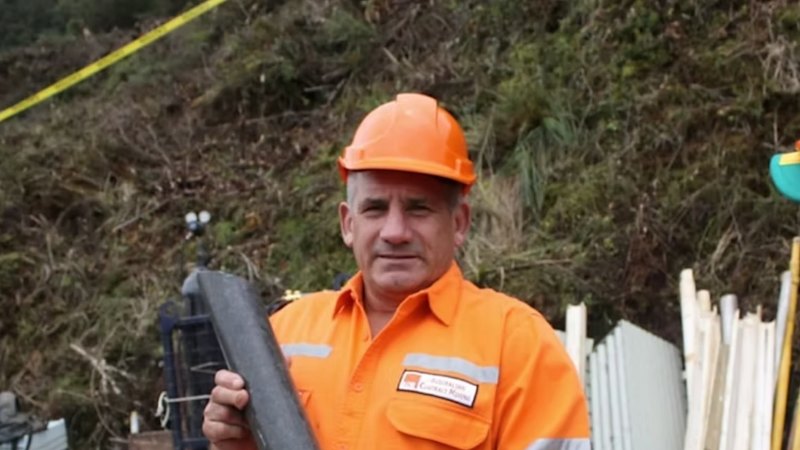
Augustus circles giant PNG gold prize in Porgera backyard
Augustus Minerals is chasing a massive gold prize in PNG, lodging an application for the Mt Kare project, a geological cousin to the nearby 32-million-ounce Porgera giant.

Starlink’s growing influence has one big point of failure
Starlink’s futuristic premise – satellite-delivered broadband – brings with it the thoroughly un-modern prospect of our access being controlled by one man: Elon Musk.
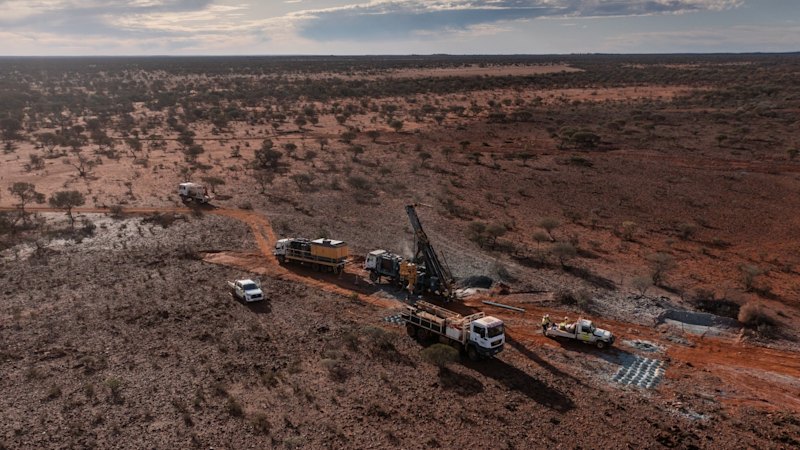
Gateway reshuffles top brass for WA Yandal gold push
Gateway Mining has reshuffled its board, appointing a new MD and Chairman to drive aggressive gold exploration at its well-funded Yandal project, 85km northeast of Wiluna in WA.

Abundance or extinction? We can still influence AI’s outcome, but not for long
There are two very distinct narratives emerging about AI right now, and they’re both getting more extreme.
Zenith hits 14 from 14 in WA gold drilling campaign
Zenith Minerals has hit more gold at its Dulcie project in WA, including 6m at 4.14g/t gold. All 14 holes assayed at Dulcie Central have now returned gold mineralisation.

Iron Bear retakes full control of generational Canadian iron ore giant
Iron Bear Resources has regained full control of its giant Canadian iron ore project, leaving it holding a US$9B NPV prize and the freedom to chase heavyweight funding partners.

Locksley fires up copper growth push across NSW heartland
Locksley Resources has unveiled a copper growth strategy at its Greater Tottenham district in NSW. The plan combines its 9.86Mt Tottenham resource with the newly optioned Iron Duke project, covering 1000sqkm.

The damage Trump has inflicted on America is spreading
A shock economic update couldn’t have come at a worse time for Donald Trump and the Republicans.

ASX claws back most of its early losses after rate hike fears ease
The Australian sharemarket has clawed back most of its early losses after unemployment hit its highest level in five years, easing the pressure on the Reserve Bank to lift interest rates.

‘Obsessed’: The reclusive billionaire heiress who can’t stop getting richer
Sandra Ortega has amassed enormous wealth without ever playing a role in the business her parents started – now the world’s biggest fashion retailer.

Delta to offer free in-flight Wi-Fi on all Australian flights within weeks
The US airline says it has no regrets about picking a fight with Elon Musk by saying no to using his Starlink system to keep its passengers connected.
YOUR NEWS, OUR NETWORK.
Do you have Great News you want to tell the world?
Be it updates about your business or your community, you can make sure that it’s heard by submitting your story to our network reaching hundreds of news sites across 6 verticals.