
Swiping for Love: Survey Finds 53% of Digital Dating Users Are Seeking Romance
Oct 16, 2026
A Kanto Smart Living Cooperative survey found that 53 percent of respondents use digital dating to find a romantic partner, while 35 percent hope to expand their social circles and make new friends, and 32 percent lack opportunities to meet new people offline. The cooperative says the growth of digital dating raises questions not only about how people meet, but also about how they communicate expectations, establish trust and maintain personal boundaries.

via MERXWIRE)
TOKYO, JAPAN (MERXWIRE) – Opening a phone after work, starting a conversation about shared interests and exchanging details of everyday life before deciding whether to meet has become one way to get to know someone new. Through its survey on the main reasons for using digital dating, the Kanto Smart Living Cooperative sought to understand what draws people to these services and what kinds of relationships they hope to build. Finding a romantic partner was the most frequently selected reason. But making friends, easing the pressure of initial social encounters and finding someone to talk to also featured among respondents’ motivations.
Those different needs have led the cooperative to look beyond the number of successful matches. Some hope for a committed relationship, others prefer to begin as friends, and others have not yet decided what they want. The cooperative believes those differences need to be clarified through communication, rather than assuming that a match or frequent conversation establishes shared intentions. In its view, the value of digital dating also depends on whether users can express their needs, reject uncomfortable requests and retain the freedom to change or end an interaction.
| Reason | Share |
|---|---|
| Find a romantic partner | 53% |
| Expand social circles and make new friends | 35% |
| Limited opportunities to meet new people offline | 32% |
| Interact online first to ease face-to-face social pressure | 27% |
| Too busy with work for in-person social activities | 24% |
| Pass the time or find someone to chat with | 20% |
| Find a marriage partner | 19% |
| Curiosity or a desire to try something new | 17% |
| Recommendations from friends or social media influence | 15% |
| Other | 6% |
Romance Leads, but Motivations Overlap
Respondents could select up to three reasons for using digital dating. Finding a romantic partner was the most common answer, chosen by 53 percent, followed by expanding social circles and making new friends, at 35 percent. Another 32 percent said they lacked opportunities to meet new people in everyday life. The results suggest that digital platforms can serve both as an entry point into romance and as a way to widen social connections beyond familiar routines.
Twenty-seven percent said interacting online first helped ease the pressure of face-to-face socializing, while 24 percent cited busy work schedules that left little time for in-person activities. Twenty percent wanted to pass the time or find someone to chat with, and 19 percent were looking for a marriage partner. Curiosity or a desire to try something new accounted for 17 percent, recommendations from friends or social media influence for 15 percent, and other reasons for 6 percent. Because multiple answers were allowed, these motivations may coexist rather than represent separate groups of users.
The cooperative believes the most important finding is not simply that romance ranks first, but that people’s motivations are varied and can overlap. Someone may want to make friends while remaining open to a romantic connection; another person may prefer to chat before deciding whether to meet. Expectations may also change as an interaction develops. Dividing everyone into those seeking a “serious relationship” and those “just chatting” can overlook that gradual process. Rather than requiring people to define a relationship at the outset, the cooperative emphasizes expressing current intentions, communicating when they change and respecting different paces without treating uncertainty as a lack of sincerity.
Online Introductions Gain Ground in Japan
Japan’s 17th Japanese National Fertility Survey offers another perspective. According to the National Institute of Population and Social Security Research, the share of surveyed couples who met online, including through applications, rose to 20.2 percent in the 2025 survey from 11 percent in the previous survey in 2021. That increase of 9.2 percentage points brought the figure close to twice its previous level, while introductions through workplaces and friends declined. Online connections have become an important starting point for some marriages, rather than merely a supplement to traditional introductions.
The national survey was conducted in June 2025 across 1,000 randomly selected survey districts. It covered unmarried adults ages 18 to 54 and married couples whose wives were younger than 55, collecting 6,756 valid responses from unmarried adults and 5,024 from couples. Wives answered the couples’ questionnaire. By examining unmarried people’s expectations alongside married households’ experiences, the survey provides context not only for how couples meet, but also for changing attitudes toward marriage and family life.
| Survey year | Share |
|---|---|
| 2021 | 11.0% |
| 2025 | 20.2% |
The cooperative’s survey asks why people use digital dating, while the national survey examines how married couples met. Their populations and measures differ, so they cannot be treated as a continuous account of the same people moving from platform use to marriage, nor can they establish a platform marriage success rate. Viewed alongside one another, however, they illustrate the roles digital services can play at different stages: Some people begin by seeking friends, others join with romantic expectations, and some ultimately marry someone they meet online. The cooperative believes this comparison helps explain the varied uses of digital dating without making marriage its sole measure of value. Each stage, from an initial exchange to a decision to date, involves different expectations and time to assess compatibility.
More Ways to Meet Do Not Necessarily Mean More Interest in Marriage
The increase in online introductions has not been accompanied by stronger overall marriage intentions. The national survey found that 75.1 percent of unmarried men ages 18 to 34 intended to marry someday, down from 81.4 percent in the previous survey. Among women, the share fell to 77.8 percent from 84.3 percent, putting both figures below 80 percent for the first time. Roughly one-third of unmarried respondents did not want a romantic relationship, a reminder that not everyone who is single is looking for a partner.
For the cooperative, that contrast demonstrates why creating opportunities to meet and increasing interest in marriage should be treated as different issues. Platforms can help people who want a connection, but more matches cannot automatically be assumed to produce more marriages. Some people want romance without yet considering marriage; others want a partner but not children, while others prefer to remain single for now. Those different plans should not be reduced to whether a matchmaking service has succeeded or failed.
| Respondents | 2021 | 2025 |
|---|---|---|
| Men | 81.4% | 75.1% |
| Women | 84.3% | 77.8% |
Looking for Romance and Looking for Marriage Are Not Opposing Goals
In the cooperative’s survey, 53 percent selected finding a romantic partner and 19 percent selected finding a marriage partner. Those figures should not be read as evidence that respondents outside the latter group reject marriage. The questionnaire allowed multiple answers, meaning someone could select both goals or hope to develop a relationship before deciding whether marriage would be appropriate. The difference captures stated motivations, not a definitive division between people who will and will not marry.
The national survey also found a more nuanced shift in how unmarried people assessed marriage. Fewer saw advantages in financial comfort, emotional stability or having children and a family, while the appeal of living with someone they loved increased. For the cooperative, this suggests that marriage’s different attractions should not be treated as moving in the same direction. People may place greater emphasis on a particular partner and the life they could share, rather than viewing marriage simply as a milestone to complete at a certain age.
The cooperative encourages users to discuss their intentions when appropriate while allowing room for those intentions to evolve. People seeking marriage are entitled to look for someone with similar hopes, just as those seeking friendship should not be pressured into intimacy. Clear communication does not mean deciding a shared future in the first conversation. It means avoiding a situation in which one person continues investing time and emotion on the basis of an expectation the other does not share.
Online Familiarity Is Not the Same as Trust
Twenty-seven percent of respondents said communicating online first helped reduce the pressure of meeting face to face. For people who need time to become comfortable with someone new, messaging offers a flexible way to begin and explore shared interests. The cooperative cautions, however, that text conversations reveal only part of a person’s life and character. Frequent contact should not, by itself, be treated as evidence of a well-established foundation of trust.
Moving from messages to meetings still requires attention to how someone communicates, whether they respect boundaries and whether their actions are consistent with their words. Photographs and profile descriptions can start a conversation, but they cannot guarantee sincerity. If an interaction becomes uncomfortable, users should feel free to pause, decline a request or end contact. Time already spent chatting does not create an obligation to continue replying or agree to a meeting.
Keep Financial Decisions Separate From Emotional Pressure
The cooperative advises users not to send money hastily because someone expresses affection, promises a shared future or claims to be facing an emergency. If a conversation turns toward investments, loans, payments or requests for banking information, users should pause rather than treating the relationship as a guarantee that a transaction is safe. Persistent urgency, demands for secrecy or resistance to verification should prompt a reassessment of the interaction.
Personal information also deserves protection. The cooperative recommends avoiding early disclosure of home addresses, workplace details, regular routines and financial information. For a first meeting, it suggests choosing a busy public place, telling a trusted person about the plans and retaining an independent way to leave. Boundaries need not be understood as a rejection of the other person; they can help create conditions in which both people feel more comfortable getting to know each other.
Verification Should Come With Clear Privacy Rules
The cooperative also calls attention to how platforms design their safeguards. Basic identity verification and reporting functions are features users can examine when choosing a service, but requesting more information should not automatically be equated with providing greater safety. Platforms should explain what they collect, why they need it, how it is stored and what happens when a user leaves the service. That transparency allows people to make a more informed decision about participation.
A verified identity, the cooperative adds, does not guarantee that someone’s intentions or promises are genuine. Verification and judgment during an interaction address different problems and cannot replace one another. Beyond checking account identities, platforms should make blocking, reporting and ending contact straightforward. Users who raise concerns about unwanted behavior should also be able to understand how those concerns will be handled.
| Stage | What the cooperative recommends checking |
|---|---|
| Choosing a platform | Identity checks, reporting tools and clear privacy policies |
| Early conversations | Respect for response times and openness about expectations |
| Requests involving money | No rushed payments because of affection, investment claims or emergencies |
| First meetings | A public location, a trusted contact informed and an independent way to leave |
| Ending contact | Accessible options to decline, block or report |
A Good Connection Includes the Freedom to Leave
For the cooperative, digital dating quality should not be measured solely by likes, messages or meetings. Whether users can stop an uncomfortable interaction, obtain a response to a report and understand how their personal information is handled matters as well. Platforms that help initiate contact should also support an environment in which people can approach others with confidence and withdraw without pressure. The freedom to leave is part of a respectful connection, not a failure of one.
Technology can begin a conversation between people who might otherwise never meet, but a relationship’s future depends on more than a successful match. Through this survey, the cooperative hopes to move the discussion beyond how many people arrive looking for love toward whether they can build connections with confidence and peace of mind. Whether an exchange leads to friendship, romance or a decision not to stay in touch, healthy interaction should rest on trust, honesty, respect and the freedom of both people to choose the next step. The cooperative hopes users and platforms will help create a more supportive environment — one that makes it possible to reach beyond familiar social circles without surrendering personal boundaries or feeling pressured to move faster than feels right.
Media Contacts:
Kanto Smart Living Cooperative
PR Agency:
MERXWIRE INC.
Ada Huang
[email protected]
SOURCE: Kanto Smart Living Cooperative
More News

Right Resources clocks 90% gold recoveries in NSW met test
Right Resources achieved 89.9% gold recoveries in cyanide leach tests at its NSW pilot project, with low reagent consumption strengthening its processing outlook.

ASX ends flat as inflation boosts rate rise bets; tech stocks rally
The Australian sharemarket erased its morning gains after the release of the nation’s latest inflation figures increased pressure on the Reserve Bank to lift interest rates next week.

Forrestania adds more gold ounces to WA production pipeline
Forrestania Resources has tabled a 25,800oz gold resource at its Symes Find project, adding inventory ahead of a planned mid-December restart at its Edna May plant in WA.

Hastings completes US$15M Thai rare earths plant deal
Hastings Technology Metals has finalised a US$15 million deal for its Thai rare earths plant, with first production slated for the second quarter of next year.

Aurum powers past 3.8Moz gold at West African flagship
Aurum Resources has boosted its Boundiali resource in Côte d’Ivoire by 19% to 3.84 million ounces of gold, swelling the indicated category to 2.33 million ounces.

McLaren adds fresh upside to monster WA mineral sands play
McLaren Minerals has uncovered a potential new mineral-rich shoreline east of its WA deposit, with drill holes 6km apart hitting high-grade zones of up to 13.26% heavy minerals.

Thank you, Mr President: BlueScope gets a windfall from Trump’s tariffs
Donald Trump’s tariffs on steel imports have kicked off a bonanza for steel producers in the US, including BlueScope. They’re a pain for the wider economy.

Dateline pledges to deliver US gold vision of late chairman
Dateline Resources has vowed to advance its billion-dollar Colosseum gold project in California following the passing of longtime chairman Mark Johnson.

‘Profit over compliance’: Star says it can afford $260m money-laundering fine
The casino operator says its financial survival is assured despite the Federal Court hitting it with a much larger fine than what it previously flagged as unaffordable.
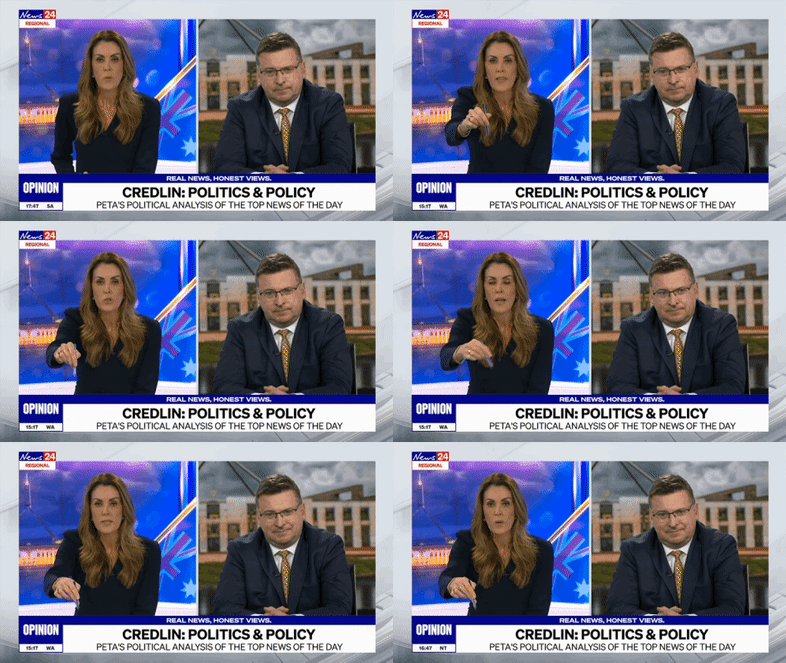
‘You’re not going to hijack my show’: Credlin, Clennell in fiery on-air clash over One Nation comment
The pair clashed over Credlin’s perceived failure to defend him after Clennell claimed he was called a “dickhead” by One Nation’s national director James Ashby.

On the day that ‘stops the nation’, the RBA will stop inflation (again)
On Melbourne Cup day – bet on interest rates rising. It’s a sure thing.

Uber faces Australian class action over sexual assaults, harassment by drivers
The managing law firm’s class action callout follows a flood of legal actions in Australia and abroad concerning Uber’s handling of driver misconduct claims.
YOUR NEWS, OUR NETWORK.
Do you have Great News you want to tell the world?
Be it updates about your business or your community, you can make sure that it’s heard by submitting your story to our network reaching hundreds of news sites across 6 verticals.