
Australia succeeds in stopping migrants but many in limbo
Jul 18, 2018
Australia drew a line in the sand on July 19, 2013, to stem a rising tide of asylum seekers brought by people smugglers on long and treacherous ocean voyages
CANBERRA, Australia — When Aziz Abdul reached Australia's Christmas Island aboard a smuggler's boat, he had no idea that weeks earlier in 2013, his fate as a refugee from Sudan seeking a new life in a new world had been sealed.
Australia drew a line in the sand on July 19, 2013, to stem a rising tide of asylum seekers brought by people smugglers on long and treacherous ocean voyages. No refugees who attempted to reach its shores by boat from that date forward would ever be allowed to make Australia their home.
Five years later, the polarizing policy — both lauded as a template for other countries and condemned as a cruel abrogation of Australia's international obligations — appears to have succeeded as a deterrent. The rickety fishing boats that were arriving from Indonesian ports at a rate of more than one a day have virtually stopped.
But the question of what will become of the hundreds of asylum seekers banished by Australia to sweltering immigration camps in the poor Pacific island nations of Papua New Guinea and Nauru has become more pressing.
"The simplest way for me to describe it is it's just like hell," Abdul, 25, told The Associated Press by phone from an immigration hostel in a Papua New Guinea village. He now hopes to be chosen among the 1,250 refugees barred by Australia but who President Donald Trump has reluctantly agreed to accept as part of a deal struck between the Australian government and former President Barack Obama's administration.
"You send people to a place and you want those people to either die or go back to where they came from even if that place is very, very dangerous," Abdul said. There was a growing sense of hopeless and fear of hostile villagers among the asylum seekers, some of whom no longer speak because of their despair, he said.
Daniel Webb, director of Australia's Human Rights Law Center, told the U.N. Human Rights Council last month that Nauru's refugee population included 134 children, 40 of whom had been born there. The number had dropped to 124 by this week, with some children sent to Australia for medical treatment and others to the United States for resettlement.
"With every anniversary, with every birthday and with every death, the sense of hopelessness and sheer exhaustion in these island prisons rises," Webb said this week. "Our government can't just imprison them forever."
Australia offers to pay thousands of dollars to asylum seekers who agree to go home, and many have taken up the offer over the past five years rather than languish any longer in their island limbos. Australia also struck a multi-million dollar deal with Cambodia to accept refugees who agree voluntarily to leave Nauru and Papua New Guinea, but few took up that offer.
New Zealand has offered to resettle 150, but successive Australian governments have declined for fear that the wealthy near-neighbor would become a back door for the exiled refugees to enter Australia.
The island camps have been the scenes of riots, murder, suicide and escalating mental illness.
The Australian government last year reached a settlement of around 90 million Australian dollars ($68 million) with more than 1,905 asylum seekers who sued over their treatment in Papua New Guinea. The asylum seekers were seeking damages in an Australian court for alleged physical and psychological injuries they say they suffered.
Australia blames the asylum seekers for their plights. The government believes they remain in the islands under the mistaken belief that Australia will eventually relent and let them in.
That's what happened after Australia adopted a forerunner to the current policy in 2001.
When Norwegian freighter MV Tampa rescued 433 Afghan asylum seekers from a sinking Indonesian fishing boat and attempted to deliver them to the nearest port, Christmas Island, Australia sent special forces troops to stop the ship. The Tampa with its human cargo was sent to Nauru under Australia's new policy of keeping asylum seekers from its coast that became known as the Pacific Solution.
Conservative Prime Minister John Howard was re-elected weeks later in a campaign that focused on his tough stance on asylum seekers.
The boat arrivals slowed over the next few years as Australia-funded immigration detention camp populations grew on Nauru and Papua New Guinea. A few countries took some refugees off Australia's hands. In the end, Australia quietly accepted the last several hundred refugees without political protest.
A new center-left Labor Party government closed the Nauru camp in February 2008, when the final 21 Sri Lankan refugees were flown to Australia. Papua New Guinea had been closed years earlier. Then-Immigration Minister Chris Evans called the Pacific Solution policy "a cynical, costly and ultimately unsuccessful exercise introduced on the eve of a federal election."
But when the boats started coming back, it was a Labor government that reopened the camps on Nauru and Papua New Guinea in 2012. Weeks before an election the following year, Labor Prime Minister Kevin Rudd ratcheted up the policy with the declaration "asylum seekers who come here by boat without a visa will never be settled in Australia."
Andrew Markus, a Monash University expert on immigration, said studies of Australians' attitudes found that majority-support for the government's tough refugee policy remained entrenched despite no boats arriving since mid-2014.
Markus does not believe it would be politically possible for a government to resettle the island refugees in Australia now as happened a decade ago.
"They've really painted themselves into a corner," Markus said of the promise that boat arrivals would never be accepted.
Some are still trying. The government revealed this week that it had turned 33 asylum seekers boats back to Indonesia in the past five years. Meanwhile, the U.S. promise to accept up to 1,250 refugees will not settle the futures of all.
The Human Rights Watch Law Center said there are almost 800 asylum seekers in the male-only facilities in Papua New Guinea and almost 900 men, women and child asylum seekers in Nauru.
More than 400 have gone to Australia for medical attention or to support a sick relative and have taken court action to prevent their return to the islands, the human rights group said.
Abdul, the refugee on Papua New Guinea, believes the asylum seekers are victims of Australian politics and of lawmakers prepared to spend billions of dollars to maintain the current stalemate to protect their careers.
"I believe no matter how long we spend on this island, we are not going to go to Australia," Abdul said.
"What do you expect from this government? Do you expect that this government at the end of the day will say: 'Ok, we surrender. OK, we give up and these people, they won' — that's not going to happen," Abdul added.
More News
The real pain from rising interest rates is yet to come
The number of borrowers who are behind on their mortgage payments is rising, and it’s likely to climb further as rate hikes bite.
Coalition threat to sink gas reform triggers rare industry backlash
A broad alliance of business chiefs and unions has mounted a last-minute push for the Coalition to pass Labor’s domestic gas-reservation laws.

A new fast-food giant is coming to Australia. Its unusual ingredients aren’t the only talking point
A new chain will enter Australia’s crowded fast-food chicken market after wowing Anthony Albanese at one of its Manila stores. We put some of its dishes to the test.

Wall Street’s wild Nvidia ride delivers big paydays and even bigger bruises
Investors are doubling down on speculative wagers that have delivered both spectacular gains and crushing losses this year.

Inside Boeing’s mission to rebuild trust in the 737 after years of turbulence
In the airline industry, attention to detail is everything. Boeing’s recovery is tied to reforms on its manufacturing floor in Washington.

Commercial childcare is hitting a brick wall. Who will pick up the pieces?
Australia’s largest childcare provider has signalled its intent to surrender to a lowball private equity bid as other for-profit providers collapse in record numbers.

‘I don’t care’: Inside Jensen Huang’s last hours as Nvidia CEO
At the end, Jensen Huang looked broken and shattered, his legendary energy depleted.
I worked part-time at David Jones. I know exactly why the business failed
Lift operators, bra fitters and lying sales assistants – I mourn you all.

How Elon Musk drove the Cybertruck and Tesla’s ambitions off a cliff
Elon Musk’s passion project crashed and burned. Its demise carries a lot of weight,
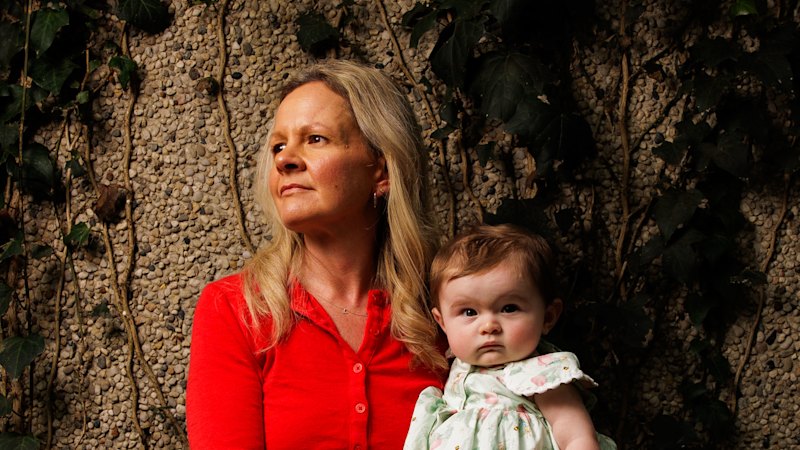
M.J. Bale axed its retail boss while she was on maternity leave. Now she’s fighting back
The Australian menswear retailer made its high-flying retail boss redundant days before her scheduled return from parental leave.
‘Either brave or mad’: A bastion of fine dining gets a sorely needed facelift
Rob and Tammy Charter had other ideas about how they wanted to spend post-work life. Like buying a heritage pub.
This Qantas jet was hit by lightning. It’s still grounded two weeks later
Pictures show the damage left by a lightning bolt, with charred areas of the skin and mesh exposed, on a plane that arrived in Melbourne from Los Angeles last month.