
Philippines urges neighbors to stand together more strongly against China in the South China Sea
Mar 4, 2024
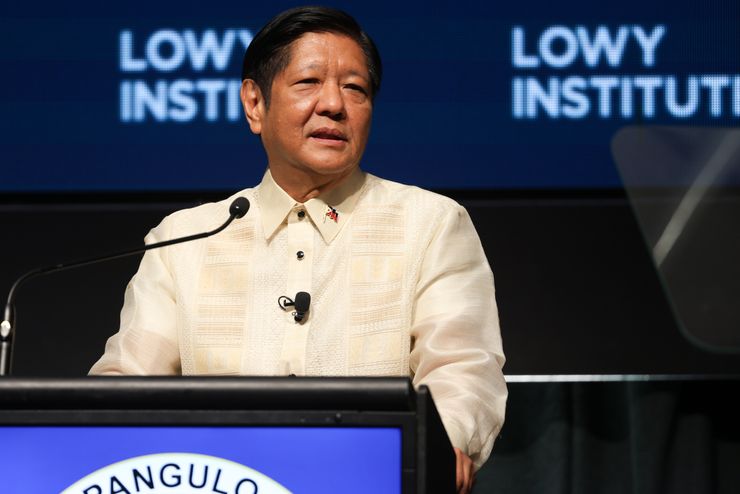
Philippine President Ferdinand Marcos Jr. says he had no choice but to defend his country’s territory in the South China Sea against what he called Chinese aggression and illegal actions in pursuit of Beijing’s own territorial claims
MELBOURNE, Australia (AP) — Philippine President Ferdinand Marcos Jr. said Monday that he had no choice but to defend his country’s territory in
the South China Sea
against what he calledChinese aggression and illegal actions
in pursuit of Beijing's own territorial claims.“It is unfortunate that despite the clarity provided by international law, provocative, unilateral and illegal actions continue to infringe upon our sovereignty, our sovereign rights and jurisdictions,” Marcos told the Lowy Institute international policy think tank in the Australian city of Melbourne.
China claims sovereignty over virtually the entire South China Sea, which is one of the world’s most crucial waterways for shipping.
That has put it at odds
with the Philippines, Vietnam, Malaysia, Taiwan and Brunei, which all maintain claims to islands, reefs and undersea resources in the region.Marcos, who is attending a summit of the Association of Southeast Asian Nations in Melbourne, said standing up to China in the South China Sea was not a policy choice.
“We simply have no choice. We must defend the territory of the republic. That is a primordial duty of a leader,” Marcos said. “The territorial integrity of the Philippines cannot be threatened, and if threats are made, then we must defend against those threats."
Earlier on Monday, Philippine Foreign Minister Enrique Manalo urged regional neighbors to stand together more strongly in upholding the rule of law in the South China Sea, where China has constructed garrisons on several artificial islands in a bid to fortify its claims.
The Philippines has accused China of
deploying coast guard ships and civilian vessels
to block fishermen's access to reefs and corals and prevent resupply of its troops.Both Marcos and Manalo referred to the Philippines’ legal victory over China in a 2016 arbitration ruling in The Hague, Netherlands, that invalidated Beijing’s vast territorial claims in the South China Sea. China did not accept the ruling.
“The shared stewardship of the seas and oceans in the region behooves us to unite in preserving the primacy of international law so we can ensure equitable and sustainable outcomes for all,” Manalo said. “It also calls for us to stand firmly together in opposing actions that contradict or are inconsistent with international law.”
The Chinese Embassy in the Philippines said in a statement Sunday that “China has always been committed to properly handling the South China Sea disputes with relevant parties through dialogue and consultation, while firmly safeguarding its territorial sovereignty and its maritime rights and interests.”
The statement accused the Philippines of using the South China Sea to launch a “malicious smear campaign against China.”
Australian Foreign Minister Penny Wong echoed Manalo’s comments, saying the nine ASEAN member states represented at the Melbourne summit need to “nurture and protect agreed rules, uphold international law, prevent conflict and build strategic trust.”
“We know that a major conflict in our region would be devastating to our communities and economies, as the terrible conflicts in Gaza and Ukraine have shown,“ she added.
She announced that Australia would spend 40 million Australian dollars ($26 million) on enhancing its maritime partnerships in the region aimed at both security and prosperity.
Australia and the Philippines,
conducted joint sea and air patrols in the South China Sea for the first time in November.Chinese Foreign Minister Wang Yi told Manalo in December that
China will maintain military pressure
on the Philippines in the South China Sea.More News

Bowser relief: Petrol prices tumble as global oil cost falls
Motorists are finally seeing some relief at the petrol pump after the cost of crude oil falls 20 per cent this month.
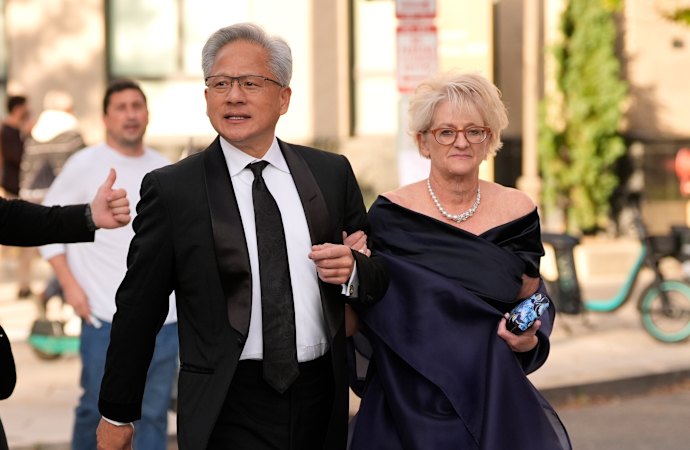
Nvidia billionaire’s affair scandal drags his wife of 41 years into the spotlight
Lori Huang has been by Jensen Huang’s side for decades but has kept a low profile as he built his fledgling start-up into one of the most valuable companies in the world. That all changed this week.

ASX treads water as Nvidia scandal rocks AI sector; Xero soars
The Australian sharemarket has finished little changed amid new uncertainty for global markets, with reports Nvidia is preparing to oust its CEO and founder Jensen Huang.

Capability X defies AI blues with stellar ASX debut
Capability X has defied weak IPO conditions and global AI stock jitters, surging almost 50% to close at 29c on ASX debut after raising $12 million to expand its industrial safety technology.
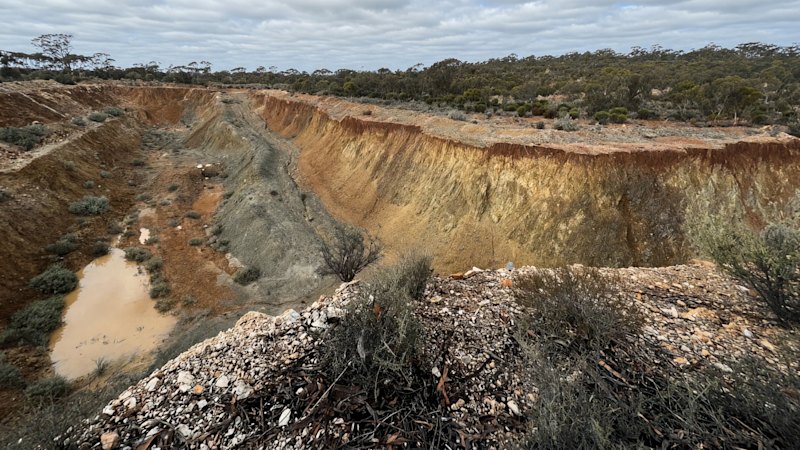
Auric pockets $17M for broad WA gold growth
Auric Mining has locked in $17 million to accelerate its WA gold growth strategy, including drilling at its Munda, Union Jack and newly acquired Iron Maiden projects.
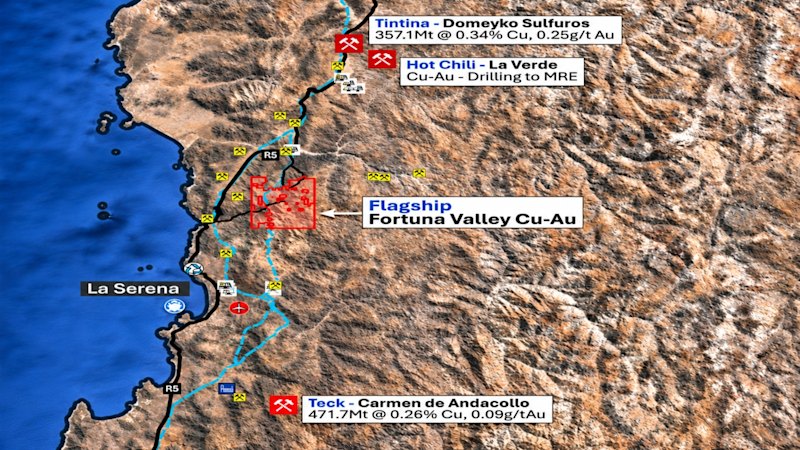
Flagship bags district-scale Chilean copper-gold project
Flagship Minerals secured an option over the district-scale Fortuna Valle copper-gold project in Chile’s prolific Coquimbo region, boasting widespread historical drill hits.
Want a bigger pay rise? You’re probably making this mistake
The ‘peanut butter raise’ usually gets spread evenly, but there are always a few extra crunchy bits for those who can make the right case.

Dalaroo fires up diamond drill hunt for African gold riches
Dalaroo Metals is set to drill its high-grade Bondoukou gold discovery in Côte d’Ivoire, with a rig now mobilising to site to test extensions of an 18m hit grading 7.31 g/t gold.
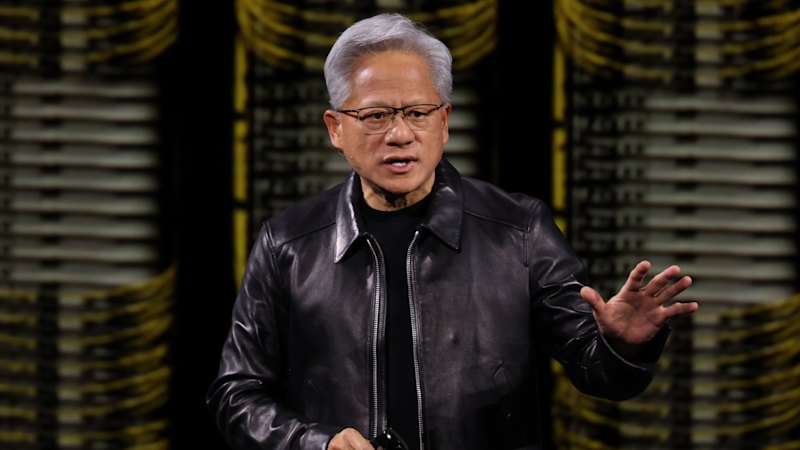
Nvidia ‘preparing to oust’ Jensen Huang, allegation of second affair emerges
Nvidia’s board is believed to be meeting to discuss the future of its founder and CEO following reports of multiple extramarital affairs, including one with a suspected Chinese spy.

Miro clears TGA audit ahead of Crohn’s disease trial
Miro Sciences has cleared a TGA manufacturing hurdle for its Crohn’s trial, with the regulator inspecting its partner’s facility ahead of a planned Phase 2 study for its StemSmart cell therapy.

China’s property implosion has further to go, and markets are worried
The scare over a liquidity crisis in a state-owned company in Guangdong has rippled through China’s debt markets and shone a light on the financial pressure in its local governments.
CBA sued for overcharging tens of thousands of businesses
The corporate regulator has started legal proceedings against the nation’s biggest bank, alleging that it misled 42,000 business customers and overcharged them about $8.5 million in fees.