
Staff Augmentation vs Managed Services: What US Companies Actually Need
Sep 17, 2026

Staff augmentation vs managed services explained for US companies. Compare management, costs, flexibility, accountability, and the right model for your team.
Austin, Texas Sep 16, 2026 (Issuewire.com) - Two CTO conversations, same week. The first: "We tried staff augmentation and it didn't work, the engineers weren't integrated, the quality was inconsistent, and we spent more time managing them than getting value from them." The second: "We tried managed services and it didn't work, the vendor made decisions without us, the deliverables weren't what we needed, and we had no visibility into what was actually being built."
Both are right. Both were also using the wrong model for their situation. At Near Contact, we understand that choosing between staff augmentation and managed services isn't about finding a one-size-fits-all solution. The question isn't which model is better, it's which model is right for you, right now, for this specific workstream. And that answer is almost never obvious from a vendor pitch deck.
Defining the Models Clearly
IT staff augmentation is the practice of adding individual engineers or specialists to your existing team. They work under your management, inside your tools and processes, on your roadmap. You direct the work. You bear the management overhead. You make the technical decisions. The augmented engineers execute. Think of it as extending your headcount without extending your payroll infrastructure.
Managed IT services is the practice of contracting a vendor to own a defined service or function on an outcome basis. The vendor staffs it, manages it, and is accountable for the service level. You define what you need (uptime, response time, output quality, security posture), not how you need it delivered. The vendor makes the implementation decisions. You measure results.
The distinction sounds clean in theory. In practice, the lines blur, particularly when managed service vendors offer "co-managed" models, or when staff augmentation engagements gradually expand into something that functions like managed delivery. Understanding the underlying principles helps you navigate these gray zones.
When IT Staff Augmentation Is the Right Choice
Choose staff augmentation services when the following conditions are true:
- You have a functioning engineering management structure. Staff augmentation requires someone capable of directing the augmented engineers' work. If your engineering management layer is already stretched thin and you're hoping augmented engineers will be self-directing without oversight, you'll be disappointed.
- The work requires deep integration with your codebase or systems. Features that require intimate knowledge of your architecture, your internal APIs, your data models, and your product philosophy are poor candidates for managed delivery. They need engineers who are embedded enough to absorb that context. Staff augmentation delivers embedded engineers; managed services delivers output.
- Your requirements change frequently. Managed service contracts are typically defined around stable service levels. If what you need is a team that can pivot weekly based on new product insights, a managed service contract will either be renegotiated constantly or will deliver against an increasingly outdated spec. Staff augmented engineers move when you move.
- You want to retain technical ownership and build internal capability. When augmented engineers work alongside your team, your team learns from them and vice versa. Knowledge accumulates internally. Managed services optimizes for output delivery, not for capability transfer to the client's team.
When Managed IT Services Is the Right Choice
Choose managed IT services when:
- You're running a defined service that doesn't require frequent change. Infrastructure monitoring, help desk support, security operations, network management, and routine software maintenance are well-suited to managed models. These functions have stable requirements, measurable SLAs, and don't require deep product context.
- You lack the internal expertise to direct the work. If you need a SOC 2 compliance program and your team has never run one, you can't effectively manage an augmented engineer doing the work -- you don't know what "good" looks like. A managed services provider brings the expertise to define, execute, and validate the approach. You measure outcomes; they own the how.
- You want outcome accountability, not effort accountability. Staff augmentation bills for time and materials. Managed services bills for outcomes. For functions where you care about whether the help desk resolves tickets within SLA, not about how many person-hours were spent, managed models align incentives more cleanly.
- Compliance and regulatory requirements call for vendor accountability. Certain regulatory contexts (healthcare, financial services, government) benefit from having a named vendor with contractual accountability for specific service standards. Staff augmentation, where the management accountability rests with the client, creates different compliance documentation requirements.
The IT Staff Augmentation for US Companies Landscape in 2026
The market for IT staff augmentation for US companies has matured significantly. The growth of verified, structured augmentation platforms, especially nearshore LATAM providers, has reduced the due diligence burden significantly. Pre-vetted talent pools, structured technical assessments, and guaranteed replacement policies have addressed many of the early concerns about augmented team quality consistency.
Managed services, meanwhile, has fragmented into increasingly specialized offerings. Beyond traditional IT outsourcing, companies are now buying managed security services (MSSPs), managed data engineering, managed DevOps, and even managed product management. This fragmentation means the "managed services" category now spans an enormous quality range -- from highly specialized firms with deep domain expertise to generalists that use the "managed" label to obscure the fact that they're providing bodies, not outcomes.
The Decision Framework: Which Model Fits Your Situation
Apply these four questions to the specific workstream you're evaluating, not to your company as a whole:
- Do we have management capacity to direct this work? If yes ' staff augmentation is viable. If no ' managed services may be more appropriate, or you need to resolve the management capacity constraint first.
- Does this work require deep product context? If yes ' staff augmentation (embedded engineers) delivers better outcomes. If no ' managed services can deliver without that context.
- Are requirements stable or frequently changing? Stable ' managed services can operate effectively. Frequently changing ' staff augmentation is more responsive.
- Do we want to build internal capability or buy consistent output? Build capability ' staff augmentation creates knowledge transfer. Buy output ' managed services delivers defined results.
Most US tech companies end up using both models simultaneously, staff augmentation for core product engineering, managed services for infrastructure, security, and support functions. The error isn't in using one or the other, it's in applying the wrong model to a specific function based on surface-level cost comparisons rather than structural fit.
Frequently Asked QuestionsWhat is IT staff augmentation?
IT staff augmentation is the practice of adding technology professionals, engineers, developers, QA specialists, data scientists, directly to your existing team on a contract basis. These professionals work under your management, using your tools and processes, on your technical priorities. The client directs the work; the augmentation provider handles sourcing, employment administration, and continuity.
What is the difference between staff augmentation and managed services?
Staff augmentation extends your headcount while leaving management and direction with your team. Managed services contracts a vendor to own and operate a defined function or service, with the vendor responsible for staffing, management, and outcome delivery. The key distinction is where management accountability sits: with you (augmentation) or with the vendor (managed services).
Which is more cost-effective: Staff augmentation or managed services?
Neither model is inherently more cost-effective, the answer depends on management overhead costs, the nature of the work, and outcome measurement. Staff augmentation is often lower in direct vendor cost but requires internal management investment. Managed services includes management cost in the fee structure. For functions where your team lacks the expertise to direct the work, the true cost of augmentation (direct cost plus management overhead plus quality risk) can exceed managed services despite lower headline rates.
Can you use both staff augmentation and managed services simultaneously?
Yes, and most mid-to-large US tech companies do. Staff augmentation for core product engineering (where deep integration and rapid direction changes are required), and managed services for infrastructure, security, QA, and support functions (where outcome-based accountability is more appropriate) is a common and effective hybrid model.
Media Contact
Near Contact
+1 (512) 853-9472
8127 Mesa Drive, Austin, TX 78759, United States
Source :Near Contact
This article was originally published by IssueWire. Read the original article here.
More News

Gambling company let more than 150 problem gamblers stay on platform
The regulator fined the social media-linked betting platform $1 million for breaching gambling safety laws.
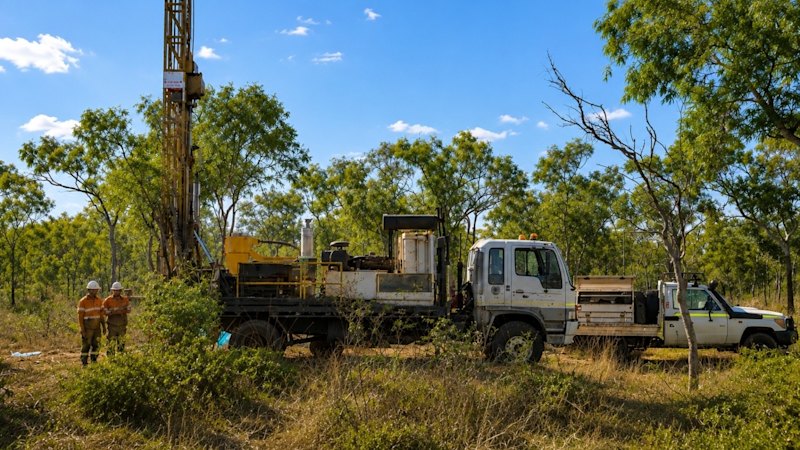
Barkly jags rich rare earths across 23km in NT
Barkly Rare Earths has landed rich rare earths in all 28 holes assayed in the NT, with mineralisation spanning 23km and showing high-grade hits up to 6064ppm TREO.

The 31-year-old who might end up as the world’s most educated person
Jamie Beaton has 12 advanced degrees from Harvard, Yale, Oxford and other top universities, with more on the way. In his spare time, he founded a company worth $840 million.

Trump has made billions from crypto. It just backfired on him
Donald Trump has just been dealt a big setback in his plan to make the US the crypto capital of the world.

Feeling the pinch? Blame the pay rise you didn’t get
One economist has blown the whistle on who’s keeping inflation high. It’s not the workers.

Rewriting Retirement
For those thinking of retirement, this six-part series provides the clarity and confidence to take the next step.

ASX slides to three-month low as banks, miners fall; oil jumps again
The Australian sharemarket closed at its lowest level in more than three months, weighed down by the mining heavyweights and the big four banks after another jump in oil prices.

Cue, Veronika Maine up for sale after 58 years leading women’s workwear
Administrators are seeking buyers to save the fashion labels, which have buckled under their mounting costs.

There’s a seriously bad industry behind Sweeney’s seriously bad ad
The Hollywood star’s risque new ad for an online sports prediction platform is just the latest bit of controversy for an industry on the rise.

‘Unfair’: Anytime Fitness in the crosshairs over hidden cost to ‘any gym’ promise
The national gym chain boasts that its members can visit any of 600 locations nationwide, but members risk being forced to pay more depending on where they train.
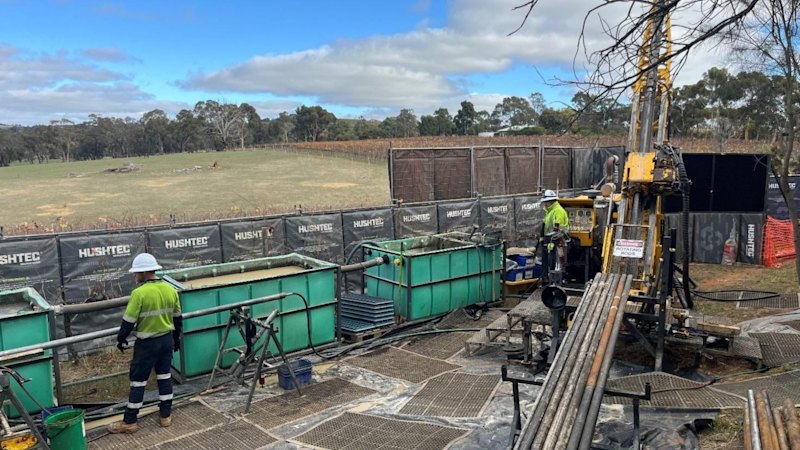
Fresh high-grade hit stretches Aureka gold footprint in Vic
Aureka has hit high-grade gold outside its Irvine resource, including 16.1g/t gold, while cracking a previously underexplored 2km gap between its two main lodes in Victoria.

Amplia opens new front in ovarian cancer fight
Amplia Therapeutics has finalised plans for its PRROSE phase two ovarian cancer trial, with site activation and patient recruitment targeted before year-end.
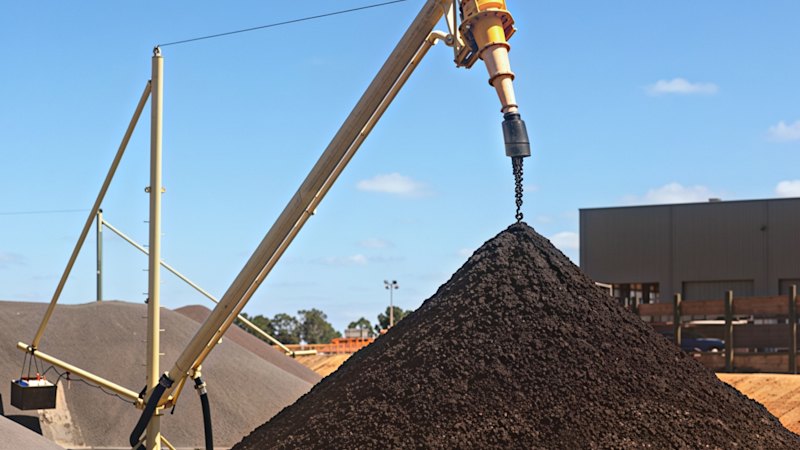
High-grade WA titanium hit puts McLaren on the money
McLaren Minerals has hit 24m at a lofty 7.54 per cent heavy minerals from surface at its WA titanium project, boosting confidence for a resource upgrade later this year.
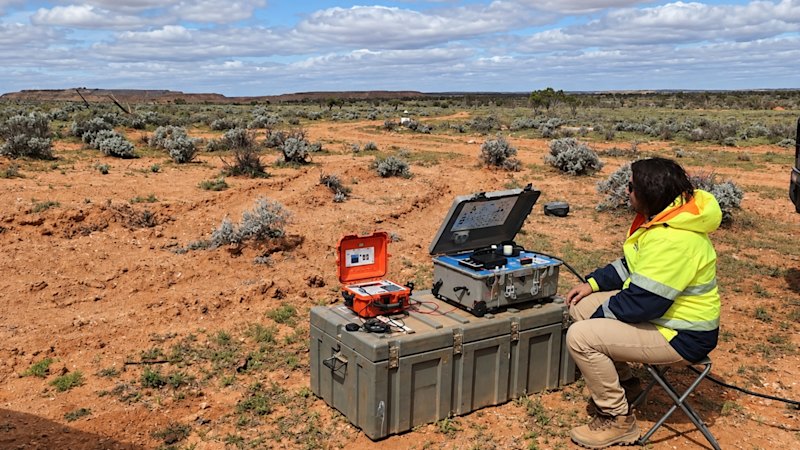
Broken Hill Gold turns up heat on deeper SA gold-copper hunt
Broken Hill Gold has stepped up its White Dam sulphide hunt in SA, deploying major geophysics and a second drill rig to chase deeper gold-copper targets well beyond Icebreaker.

Sarytogan lands second massive 318m Kazakh copper hit
Sarytogan Graphite has hit a 318m-long intersection with alteration and copper-bearing veins from surface in Kazakhstan,hinting it may be close to the heart of a porphyry.

Macca’s meals and Macbooks: How Australians are getting whacked by inflation
Inflation is spreading out from the energy sector into everyday items, keeping prices higher for longer across the economy.

Trump set to explode if his man does his job
Kevin Warsh was handpicked by Donald Trump to lead the Fed, but the pair have been on a collision course. Their relationship faces its first true test this week.

‘Oppressive and unfair’: barbs fly in Stefanovic’s podcast legal bust-up
Lawyers for Karl Stefanovic’s producer Keshnee Ibrahim claim that his attempt to oust her was “unfair” and “oppressive”.
Hundreds of jobs to go at taxpayer-backed steelworks
Hundreds of workers at the collapsed Whyalla steelworks will lose their jobs after the site’s administrators abandoned efforts to restart its ageing blast furnace.
ASX treads water after rise in oil price; Fed meeting in focus
The Australian sharemarket ended the session flat, as a rise in the price of oil fanned fears of higher inflation.

Fuel price blowout piles pressure on Albanese for second excise cut
Australians face more petrol and diesel price pain after a major Middle Eastern pipeline was forced offline.
Shipping giant to install 35-metre sail on cargo vessel to cut fuel bill
The high-tech sail will allow the ship to maintain its usual speed while throttling back its engines, or to go faster than would otherwise be possible.

Mongolian gas flows surge as TMK Energy field comes alive
TMK Energy has hit a new Mongolian gas production high, with flows surging 11 per cent on August’s numbers as production spreads across multiple wells, lifting commercial hopes.

Critica unveils 19Mt Tassie tin-tungsten heavyweight
Critica Limited has put a JORC resource around its Mt Lindsay tin-tungsten play in Tasmania, defining 19Mt at 1.09% tin equivalent for 49kt of tin and 28kt of tungsten.

Think Gen Z is to blame for alcohol’s decline? Think again
While younger people are drinking less, this is a simplistic view of changing drinking patterns.

Stefanovic in legal battle with podcast partner as talkback offer lapses
Lawyers for Karl Stefanovic and Keshnee Ibrahim, the producer behind his controversial podcast, will face off in court on Tuesday.
Forrestania doubles down with second 2Mt WA gold ore deal
Forrestania Resources has secured up to 2 million tonnes of ore in a deal with MEGA Resources, bolstering its WA processing hub strategy and restart plans.

Sarytogan tests nail 97.7% battery-grade graphite yield
Sarytogan Graphite has delivered standout battery-grade graphite results, with ultra-high purity and yields of up to 97.7 per cent ahead of large-format battery testing.
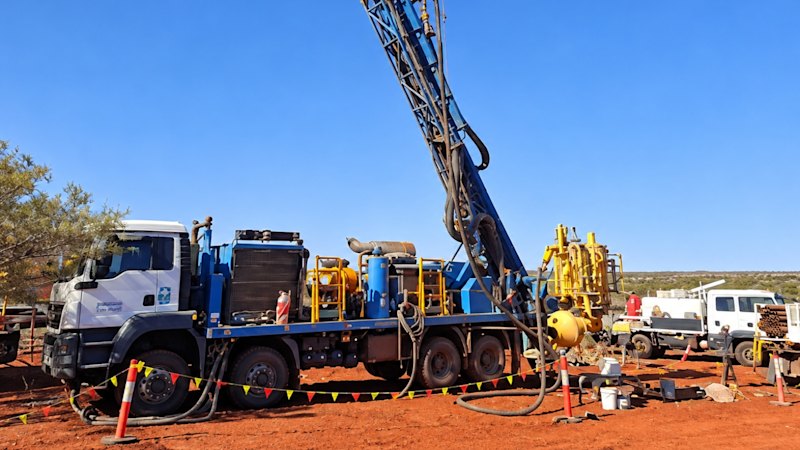
Geological smoke leads PLC Resources to bigger WA gold target
PLC Resources has started follow-up drilling at Rochefort in WA, chasing a target northwest and deeper after maiden drilling may have clipped the edge of a bigger gold system.

Major private hospital operator to be broken up after lenders back consortium bid
Sydney’s Prince of Wales Private Hospital and Melbourne’s Knox Private Hospital will be sold to private equity under a deal announced on Monday.

‘Whoever wins with AI wins’: Trump hits back at tech chiefs’ calls to slow down
President Donald Trump played down the need for his administration to check the development of artificial intelligence, saying he worried about ceding America’s edge over China in a global competition.

The economic puzzle behind AI giants’ doomsday warnings
Warnings about the artificial intelligence race are becoming ever more apocalyptic, but the AI companies can’t be counted on to slow down by themselves.

‘Humans make mistakes’: Insurer offers discount to self-driving car owners
Fully self-driving cars are already on the road in Australia, now one major insurer is backing the safety claims of the futuristic technology.

Oil spike puts pressure on airlines and their passengers
Prices for petrol, diesel and jet fuel have been escalating as the war drags on.

You’ve been put on a performance management plan. Are you on the way out?
It can feel like you’re being shown the exit, but what should you do if you’re put on such a plan – or if the expectations set out in it are unrealistic?

After axing 3500 jobs, ANZ chief’s grand plan has a long way to go
A year ago, ANZ boss Nuno Matos made sweeping job cuts and signalled a cultural shake-up. It’s only part of the planned overhaul at the big four bank.

‘A love letter to concrete and steel’: This suburban house is different
At the end of a quiet cul-de-sac in Melbourne’s inner north-west is a unique and remarkable house surrounded by typical suburban McMansions.

Big Hits: PolarX, Sunstone Metals and Manuka Resources
Bulls N’ Bears Big Hits looks at notable drill intercepts reported to the ASX last week, led by PolarX Ltd, Sunstone Metals and Manuka Resources.
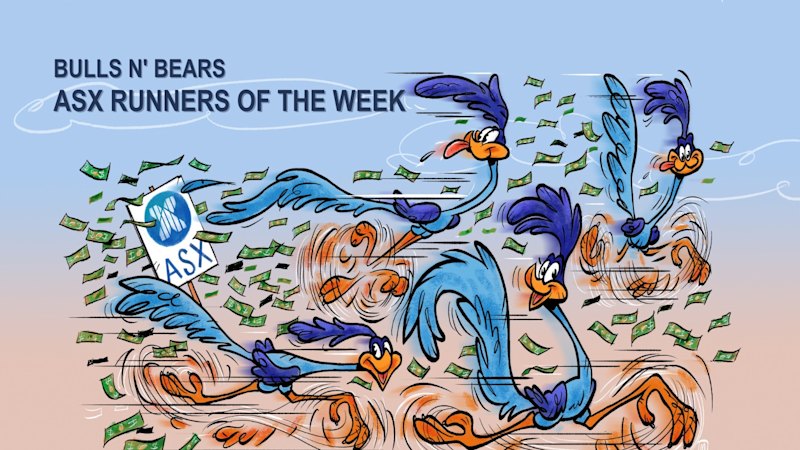
ASX Runners of the Week: Iondrive, Australasian, Aruma & Neurizon
The Bulls N’ Bears ASX Runner of the Week is... Iondrive, after an economic evaluation of its IONSolv technology showed a US$243 million (A$338 million) net present value for just a single proprietary module.

Chinese ship takes Arctic shortcut: Smart business, or a geopolitical flex?
Melting ice is opening a trade route through the Arctic. China has begun the first regular service as part of its polar ambitions.
YOUR NEWS, OUR NETWORK.
Do you have Great News you want to tell the world?
Be it updates about your business or your community, you can make sure that it’s heard by submitting your story to our network reaching hundreds of news sites across 6 verticals.